Live build demos
Live build demos put real site methods in front of builders, architects, quantity surveyors and developers. The programme is arranged for trade visitors who want to compare products, workmanship and compliance detail in one hall visit.
What the live demo programme includes
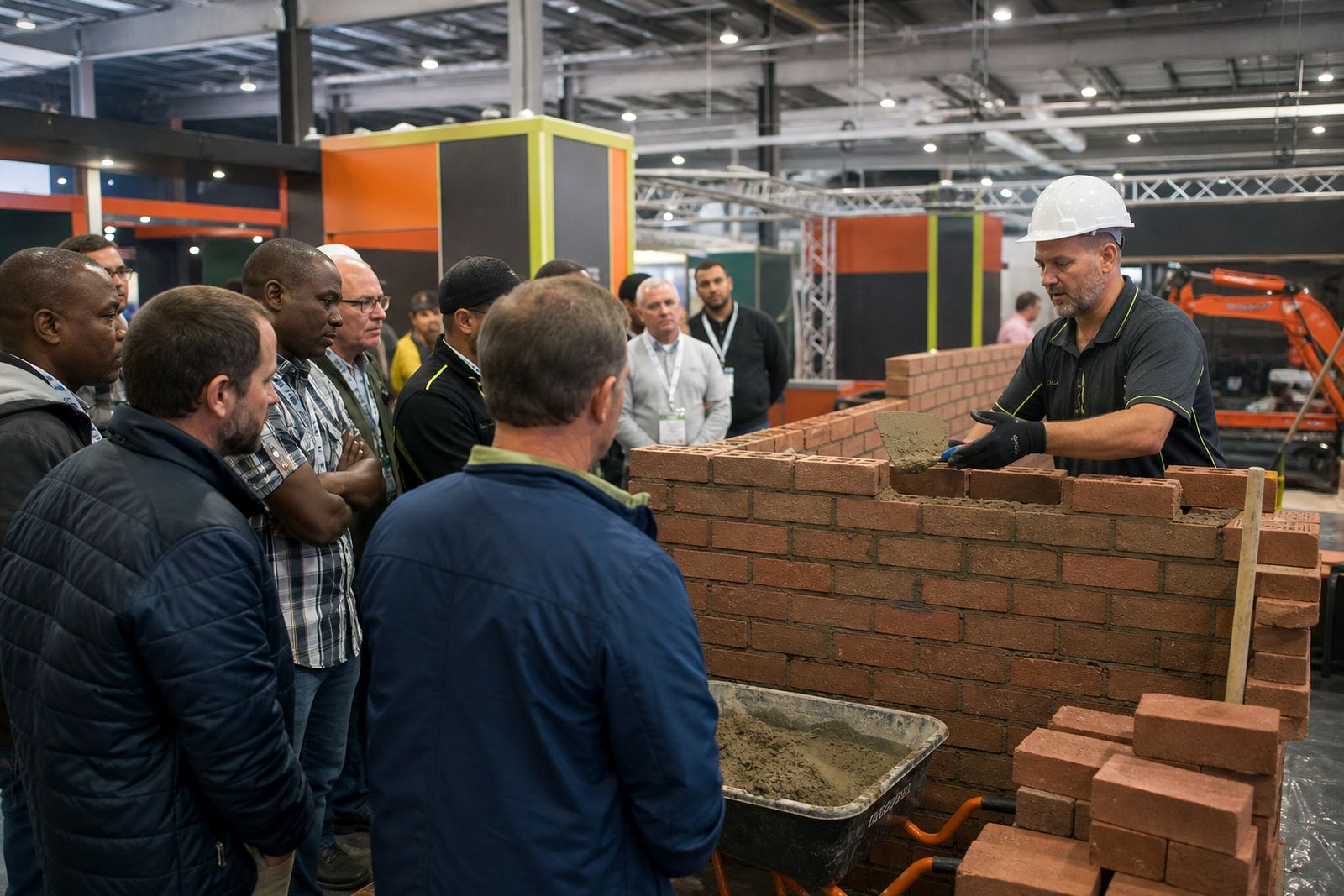
The live build demos programme is a scheduled part of the show where approved presenters demonstrate construction methods in a controlled feature area. Rather than static stand material and brochures alone, visitors can watch key steps, tool handling, fixing sequences and finishing detail as the work is carried out in front of them.
Topics usually cover high-interest trade work that benefits from visual explanation. Brick bonds, damp control, membrane application, drywall framing, joint treatment, roof sheet fixing and flashing detail are all well suited to live presentation where people can see the order of work, not just the finished sample.
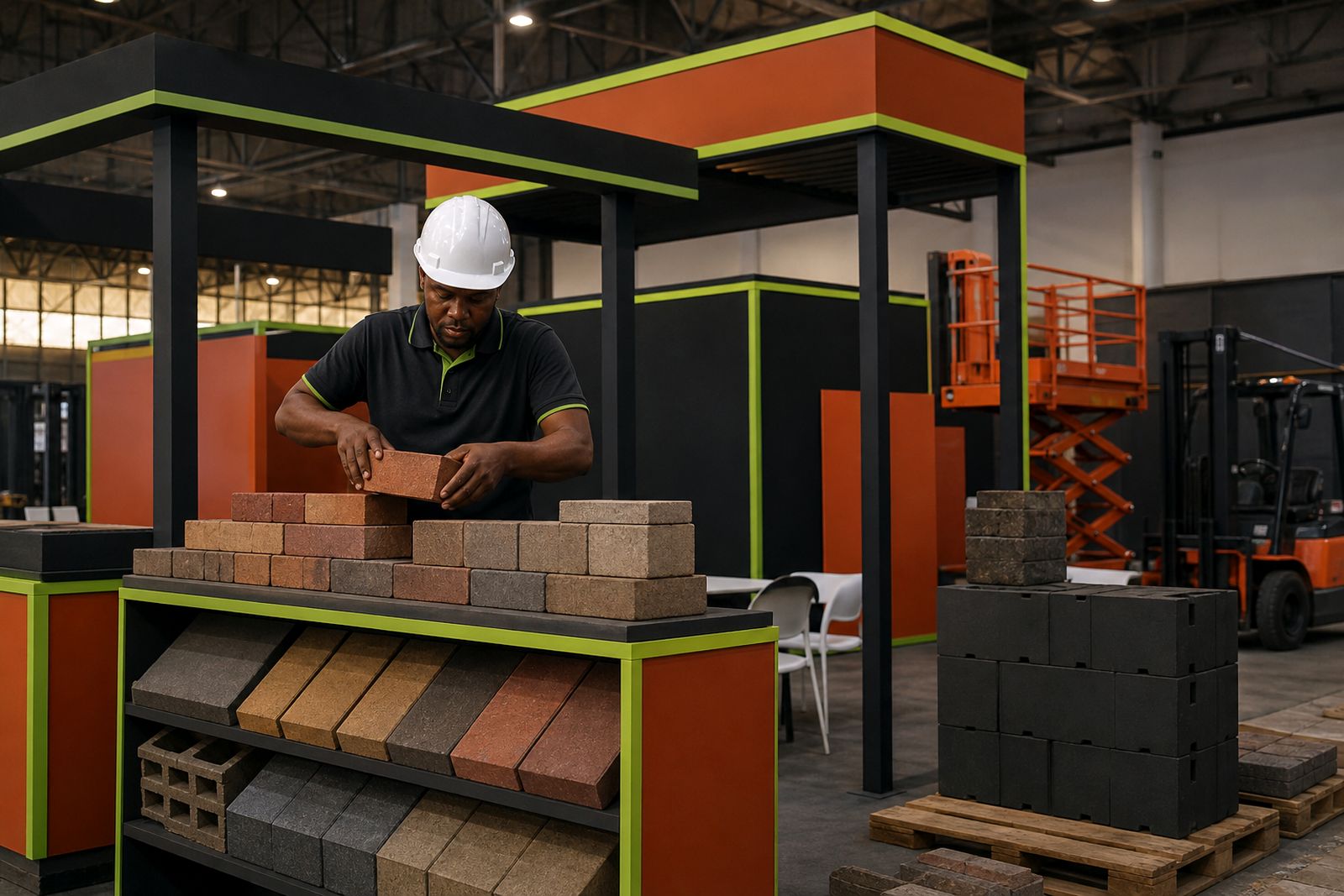
- Bricklaying demonstrations with setting out, bond patterns and mortar application
- Waterproofing demonstrations for roofs, wet areas and junctions
- Drywall demonstrations including tracks, studs, board fixing and jointing
- Roofing demonstrations with sheeting, fastening methods and weather detailing
- A moderated format that keeps the area safe, audible and easy to follow
- Visitor access for observation and technical questions during allocated sessions
How a demo slot is structured on the day
Each live session is planned around a clear method statement and a realistic build sequence. The aim is to show enough of the work to be useful to a professional audience without turning the feature area into a full site setup. That means materials are pre-checked, tools are staged before the session, and any part of the assembly that cannot be completed safely in the hall is explained with cutaway samples or prepared sections.
A typical session starts with a short technical introduction, followed by the main installation or build steps, then a moderated question period. The presenter is expected to keep the talk practical. Trade visitors want to know substrate conditions, fixing centres, curing issues, moisture risks, edge treatment, tolerances and where failures usually begin if the method is rushed.
Floor staff manage audience flow around the demo zone so that the area stays readable and safe even when a session draws a large crowd. For noisy tools or dusty tasks, the format may be adjusted and some prep may happen off-stage first, which keeps the presentation neater and more usefull for everyone watching.
The booking process for presenters
Companies or industry bodies that want to present a live demo start by outlining the topic, the trade audience it suits and the materials or equipment involved. Interbuild Africa reviews whether the subject fits the show programme, whether it can be demonstrated safely indoors and whether the content adds technical value rather than only promotion.
Once a topic is accepted in principle, the next step is programme planning. This covers the space needed, likely audience size, any support required from the hall team and the time needed before and after the slot for setup and strip-out.
- Submit the proposed topic through our contact form
- State the method to be shown and the intended trade audience
- List materials, tools, samples and any special handling requirements
- Confirm whether the session is hands-on, presenter-led or sample-based
- Provide a method statement and safety notes for review
- Receive the allocated demo format, hall access instructions and operating rules
Registered presenters receive the working information needed for the hall layout, access times and session management. Final show dates and location details inside the venue are issued through the exhibitor and visitor communications rather than posted as open public detail on this page.
What presenters need to prepare
The strongest demos are built around one method and one outcome. A presenter should arrive with a short technical story, prepared materials and a sequence that can be seen clearly from a few metres away. Long theory sections tend to lose the crowd, while a direct demonstration with visible stages holds attention much better.
Presenters must prepare all samples, boards, membranes, sections, fixings and tools required for the slot unless a specific item has been agreed as part of the event support plan. If a system relies on curing time, drying time or layered build-up that cannot happen fully during the session, bring pre-completed stages to show the result at each point. That small bit of prep usually makes the demo far more pratical.
- A concise rundown of the method and its intended application
- Demonstration materials cut to manageable hall sizes
- Safe handling notes for tools, blades, dust, coatings or adhesives
- Visual samples showing correct detail at corners, laps, joints or penetrations
- Staff who can present clearly to architects, contractors and developers
- Any compliance or installation literature relevant to the demonstration topic
How programme costs are worked out
Pricing for live build demos is not published as a flat public rate because the cost depends on the format and the resources needed around the session. A short, low-impact demonstration with prepared samples is costed differently from a larger presentation that needs more floor area, more setup time, extra handling or stricter controls around the audience edge.
In general terms, the cost is shaped by the amount of programme space used, the number of sessions requested, hall servicing requirements and how much support the organiser must coordinate around the presentation. If the demo forms part of a wider exhibiting package, that is considered as part of the event planning discussion. Technical complexity matters too, especially where materials need protected handling or the build sequence has more than one stage.
For a tailored proposal, send the demo subject, footprint, preferred format and key material notes through our contact form.
What happens after the session
After each live demo, the feature area is cleared and made ready for the next slot in the programme. Presenters remove unused materials, secure tools and leave the space in line with hall rules. Visitors who watched the session can continue the technical conversation at the presenter’s stand if they are also exhibiting, or through the event channels provided for registered participants.
The aftercare side of the programme is mainly about record, compliance and follow-through. Interbuild Africa keeps the live content orderly, makes sure the area returns to a safe condition and carries any relevant operational notes into the rest of the show schedule. Where presentation material or product sheets are intended for trade visitors, the presenter must have those ready in a format suited to hall distribution.
For many exhibitors the value of a demo carries on well after the crowd moves off, because the questions raised during the session often lead to deeper stand conversations about detailing, specification and site use in South African conditions.
What our Construction customers say
Verified Google reviews
Questions we get asked
Can a company run a product-focused demo?
Yes, if the session shows a genuine build method or installation process that gives trade visitors useful technical value. Purely promotional talks without a practical component are not a good fit for this feature.
Do we need to bring our own materials and tools?
In most cases, yes. Presenters should plan to bring the materials, samples and equipment needed for the session unless specific support items have been agreed during programme planning.
Are live demos open to the general public?
The show is arranged for the trade. Access and session information are managed through registration and event communications for approved participants and visitors.
Also worth a look
Tell us about the job
Send sizes, materials and where you are through our contact form, and we will come back with the practical options.
Open the contact form