
Exhibitor marketing toolkit
A good stand does more when the right people know where to find you and what you plan to show. This guide covers invitations, demo planning, lead capture and the follow-up work that turns stand traffic into proper sales conversations.
Start with the people you actually want on the stand
Before you send a single invite, decide which trade visitors matter most to your team. At this show that usually means architects, quantity surveyors, builders, developers, project managers and buying staff, but each exhibitor has a narrower target inside that mix. A roofing product line needs different conversations from a glazing fabricator or a design software team. If your stand tries to speak to everyone at once, the message gets thin very fast.
Split your prospect list into groups and write one plain reason for each group to visit. Architects may want detail samples, compliance information and finish options. Builders may want install speed, stock format and handling notes. Developers often want lifecycle cost and maintenance implications. That short piece of thinking saves a lot of wasted printing later.
- List your top three visitor types.
- Match each type to one product, service or live talking point.
- Decide who from your team will handle each type of conversation.
- Prepare one invitation line for each group, not one generic message for all.
Invite specifiers with a reason, not a slogan
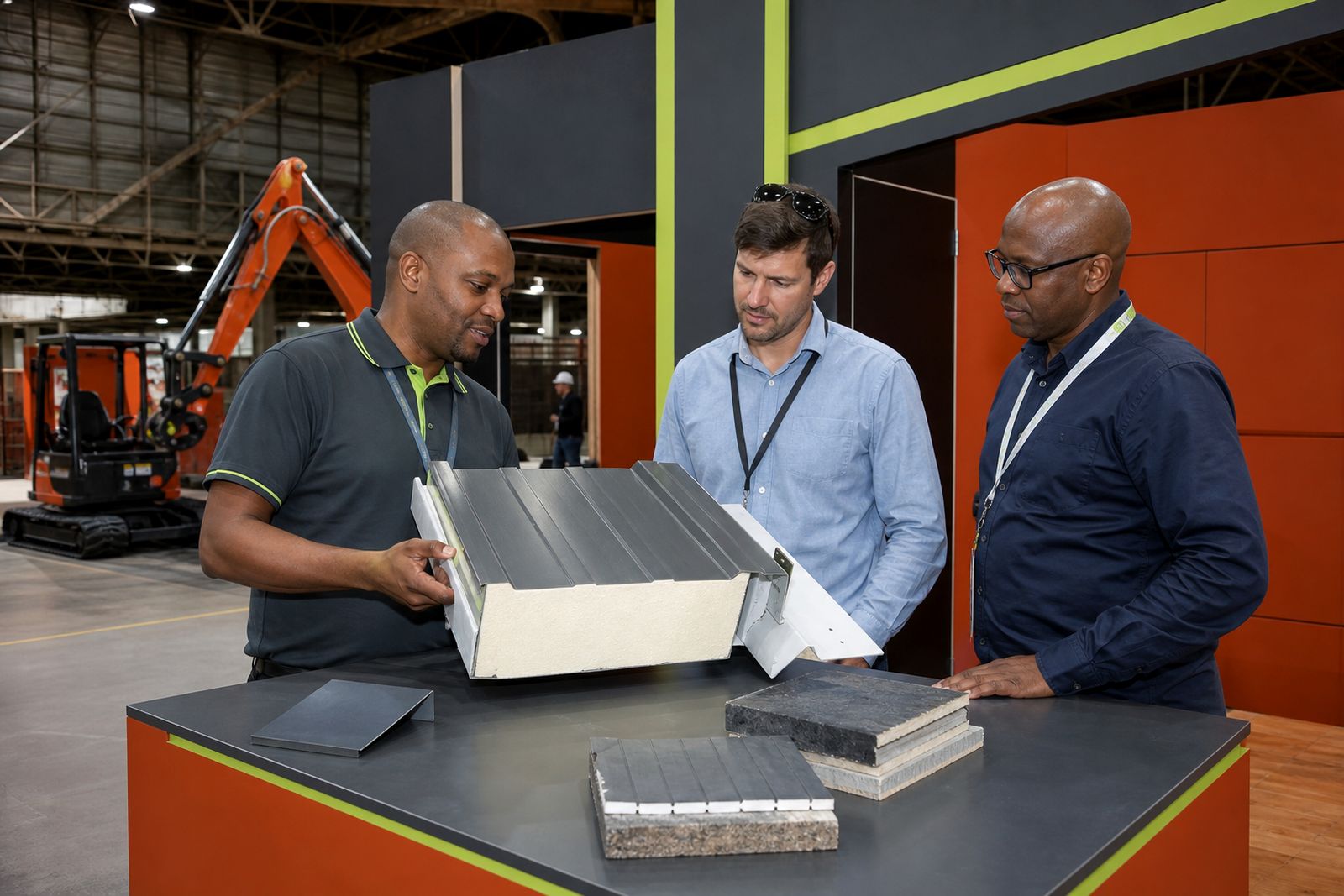
Specifiers get too many broad invitations, so yours needs to give them a clear trade reason to stop at your stand. Tell them what they can inspect, compare or discuss in person. If you are showing section samples, fixing methods, hardware options, coatings, control systems or drawings, say so plainly. If a technical lead will be on the stand for project discussions, mention that too.
Keep the wording practical. A short note about new detailing, installation methods, weather performance, acoustic considerations or site coordination is more useful than a glossy headline. It also helps to refer visitors to the relevant hall area and stand number once those are issued through the show process, so they can plan their route before arriving in Johannesburg.
- Send invitations to active specifiers already working on projects in tender, design or procurement stages.
- Include the stand number and sector once your exhibitor details are confirmed.
- Give one strong reason to visit, such as a product comparison, sample review or technical discussion.
- Offer a named session window on your stand for deeper project conversations, but keep space for walk-ups.
- Use the same core message across email, sales calls and social posts so the stand is easy to remember.
Plan demos that work on a busy exhibition floor
Live activity brings people in, but only if it can be seen and understood in a few minutes. A show floor is noisy and visitors are moving between meetings, so long explanations tend to lose them. Pick one demonstration that proves a claim clearly. That could be an assembly sequence, a fixing method, a control interface, a material comparison or a software workflow shown from start to finish.
Run through the demo at your office before the show and time it properly. Five to eight minutes is often enough for a repeatable floor demonstration, with extra discussion handled afterwards for serious prospects. Make sure the presenter knows the difference between a crowd line and a technical answer. People stop for clarity, not theatre and not waffle.
- Choose one repeatable demo with a clear beginning, middle and end.
- Check sightlines from the aisle so visitors can understand what is happening without stepping into the stand first.
- Prepare backup samples, printouts or screenshots in case the floor gets too crowded for a full explanation.
- Keep health and safety in mind for any moving parts, cutting examples or raised platforms.
- Brief the whole stand team so they can continue the conversation while the demo presenter resets.
Give the stand team a lead capture routine
Good footfall means very little if the details are patchy at the end of the day. Decide before the show what counts as a lead, what information must be captured and who is responsible for entering it. The basics are company, role, project type, product interest and next action. Add one free-text note for the issue discussed, otherwise everyone looks the same once the halls are closed.
It also helps to grade conversations on the spot. A contractor asking for immediate pricing on a current package should not sit in the same pile as someone who picked up a brochure on the way to another hall. Keep the grading simple so the team actually uses it. Too many categories and people stop filling them in.
If several people are working the stand, agree how handovers will happen. A technical conversation can start with one team member and end with another, and that is where details go missing. A short internal note after each proper discussion saves a lot of confusion later, even if the stand is flat out.
Use printed and digital material with a job to do
Not every visitor wants the same handout. Some need a quick reminder to contact the right person after the show. Others want enough technical detail to brief a wider team back at the office. Build your stand material around those differences. One short overview piece is useful for broad traffic, while technical sheets, drawings, sample cards or case notes are better kept for visitors with a defined interest.
Digital material should be just as tidy. If you direct people to a product page, a downloadable specification sheet or a booking link for a post-show meeting, make sure it matches what they saw on the stand. Mixed messages waste the advantage of face-to-face time. Keep file names and version control neat as well, otherwise your sales team lands up sending the wrong revision.
- Carry one concise stand handout for general visitors.
- Keep technical sheets ready for serious project discussions.
- Label physical samples clearly so they can be matched to later enquiries.
- Make sure digital links, QR codes and file titles are current before the show opens.
Follow up while the conversation is still fresh
The best follow-up starts before your team leaves Johannesburg. Sort leads by priority, assign ownership and note the promised next step while the discussion is still clear in everyone's mind. If a visitor asked for a drawing set, budget indication, sample pack or site meeting, record that exactly. Vague notes like call later are nearly useless.
Do not send the same generic message to every scanned badge. Tailor the follow-up to the role and conversation. A quantity surveyor may need cost and specification information, while an architect may need details, finishes and compliance points. Builders usually want practical install information, programme implications and availability for current jobs. That small bit of sorting makes the follow-up feel competent rather than automatic.
It is also worth reviewing which invitation route brought in the best visitors. You may find that direct client outreach produced better stand traffic than broad social promotion, or that scheduled technical slots drew more useful conversations than general demos. Those notes help shape your next exhibition plan, and they stop the team repeating weak activity just because it looked busy on the day.
What our Construction customers say
Verified Google reviews
Questions we get asked
What should we promote before the show?
Promote one or two clear reasons to visit your stand, such as a live demo, a product comparison, technical samples or a discussion with your project team. Keep the message tied to the visitor type you want to meet.
How detailed should our lead capture notes be?
Capture enough detail to continue the conversation properly after the show: company, role, product interest, project stage and the next agreed action. One short note on the issue discussed is usually more valuable than a long generic comment.
Should every visitor receive the same handout?
No. A short overview works for general traffic, while technical sheets, drawings and sample references are better for visitors with a defined project or specification need. Match the material to the conversation.
Tell us about the job
Send sizes, materials and where you are through our contact form, and we will come back with the practical options.
Open the contact form